Trinity Kitchen in Leeds, developed by Land Securities and delivered by K2 Architects, opened in 2013 and was one of the UK’s original indoor street-food concepts. Combining permanent operators with rotating pop-up vendors, it contributed to the creation of a whole new market in the food & beverage sector.
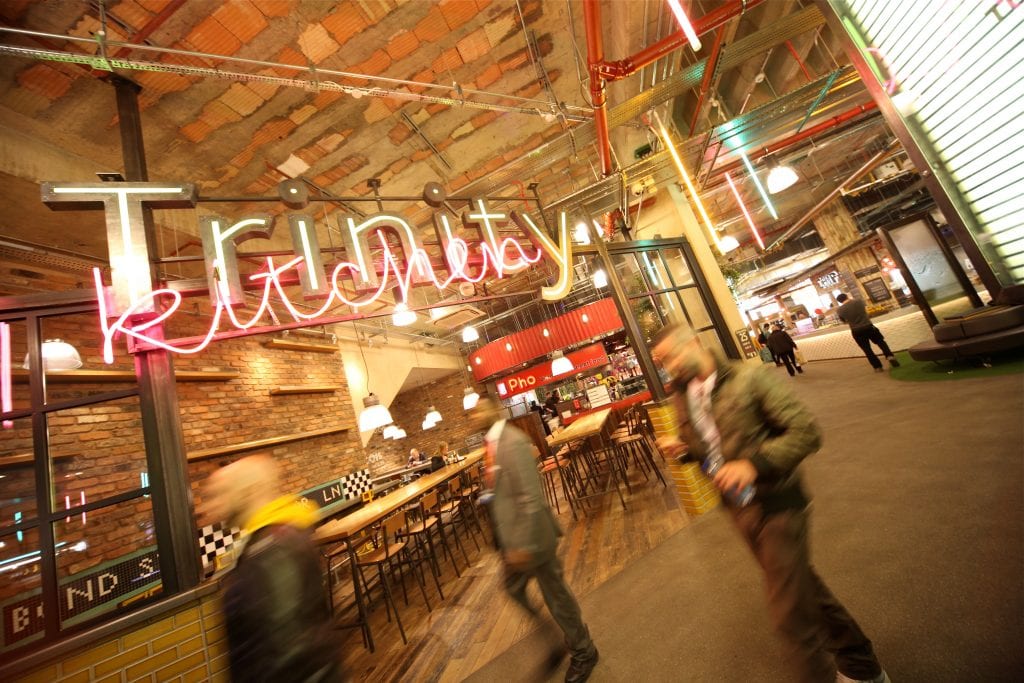
Recent figures coming out of various think tanks puts the total number of food markets in the UK at 149, up from 114 from the previous year. The sector is showing no signs of slowing up, with numbers suggesting it could break the 200 mark by the end of the year. The food hall sector looks to be very resilient against more traditional eateries, who are struggling with rising energy and food costs, and global uncertainty and war. The operating model for food and beverage vendors in these venues has economic benefits, with much lower overheads and a critical mass of offerings to increase footfall, much like traditional coffee shops grouping together on the high street.
But if food halls are looking to keep up with current trends, they need to reinvent themselves, being flexible and adaptable with an offering to embrace a wider cultural offering. The overall ambition should be to create a diverse and highly flexible indoor marketplaces as an amalgamation of local food, drink, education, art, and music as a key landmark that reflects the ‘localism’ of the culinary landscape.
Our thought process is that spaces could be largely split into zones, each distinctly different in its function and offering, whilst seamlessly bleeding into one another. Each of these zones offers something very different whilst also complimenting the function of the other; one being highly flexible and the other more grounded and controlled. The more fixed and rigid of these zones house food and drink kiosks – units intended for long-term leases. This will ground the scheme and anchor it with steady and secure offerings keeping people coming back to places they love. The other, more flexible zone is intended to be much more experimental in its community offerings, nurturing talent with more interchangeable elements, able to switch its general functions; housing educational spaces (involving local schools, colleges and universities), events and flexible cooking stations, accommodating cooking classes, live music, art exhibitions and culinary education, inclusive for everyone.
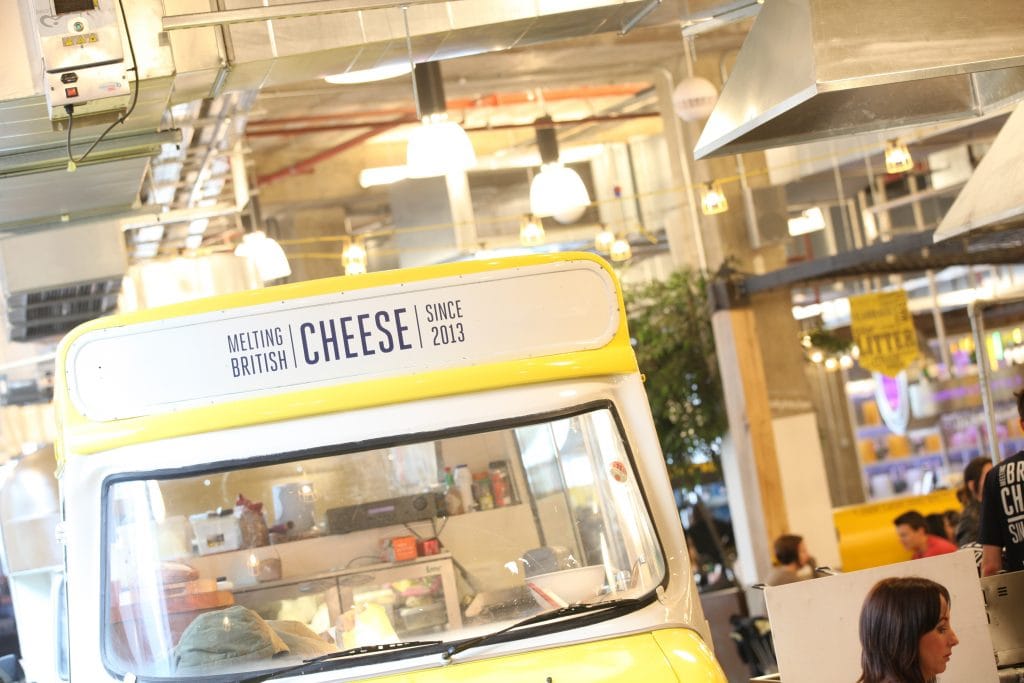
The thinking is that each zone can bleed into the other with no physical barriers, but with the option to be physically segregated from the other at certain times of day, whilst still maintaining shared functions; ensuring spaces that don’t have a nighttime offering aren’t left looking empty. The overall look and feel will tie all parts of the concept together, but with each aspect having its own unique aesthetic and being able to grow organically, allowing tenants the opportunity to make their mark, all with the aim of making people feel warm, welcome and most importantly, comfortable. Bringing as much natural light as possible into these spaces, reducing reliance on artificial light sources and increasing visual engagement with the streetscape is paramount.
The future looks bright for the ever-evolving food hall sector. While some operators are facing challenges, those venues and landlords that embrace a shift in mindset and respond to the emotional needs of their customers will stay ahead of the curve.