Earlier this year, I was down in London as a guest of a podcaster based on the City-side edge of Shoreditch, where, I’m told, the quietly fashionable creative industry professional’s dwell. I had an hour to kill, so I figured it would be the perfect opportunity to grab a coffee, sit down and get my bearings.
However, it was not as easy as I expected.
Being of a certain age, I am still receptive to the idea, when I’m a bit lost, of asking locals for advice. But after drifting into a couple of corporate lobby cafés and being told that yes, I could buy a coffee, but I would have to drink it outside, or — dare I ask — whether there was anywhere else nearby, only to be told “I wouldn’t know, I’m not from around here,” something started to dawn on me.
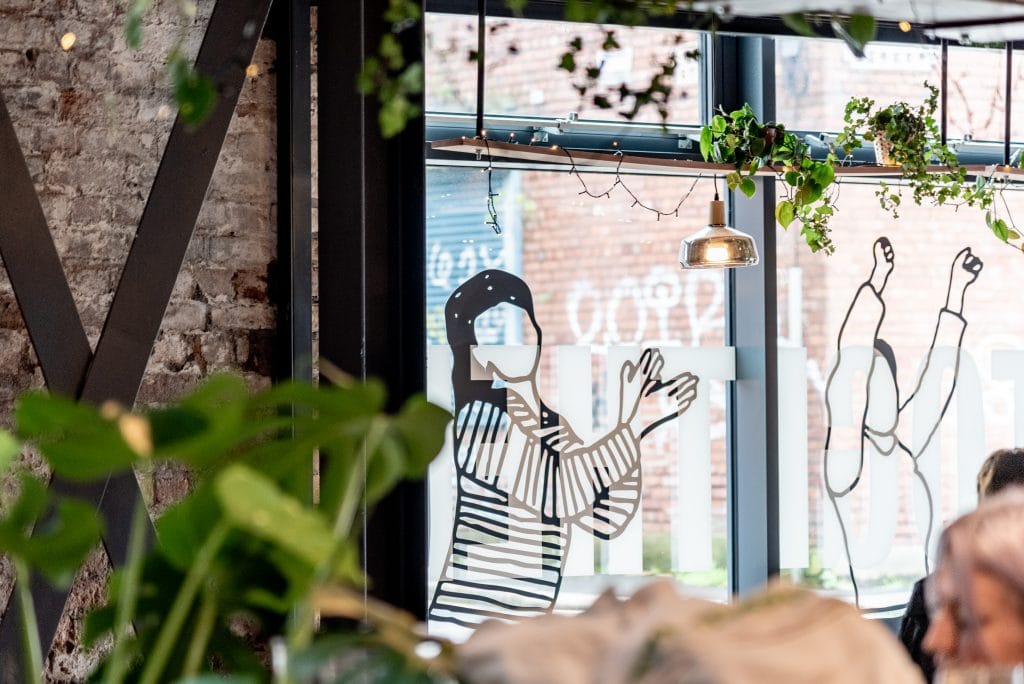
Much of what now presents itself as “creative workspace culture” has become strangely detached from the communities it claims to serve. The aesthetic remains — exposed services, reclaimed timber, carefully curated informality — but in many places the underlying culture has thinned out, replaced by transient workplace populations and corporate environments borrowing the visual language of creativity without necessarily supporting the social infrastructure that sustains it.
Since the last time I was in this part of London — and to be fair, it had been a while — much of the original independent Shoreditch scene has drifted further east towards Hackney, London Fields and De Beauvoir, replaced by coffee chains, managed workspaces and corporate lobby cafés.
Now here’s the important bit.
Since COVID, Baltic Creative has become a major reference point for the leveraging the creative and digital workspace sector for regeneration. Its Community Interest Company (CIC) model and strong social purpose make it particularly attractive to local authorities and public-sector-led regeneration initiatives.
However, its value is often misunderstood, and that really matters.
Because the success of Baltic Creative was never really about workspace design in isolation. It was about stewardship, local identity and creating the conditions for a community to emerge, grow and retain value within a place over time.
Baltic Creative should not be understood as a workspace product to replicate, but as a set of regeneration principles rooted in authenticity, community, governance and long-term social purpose. Its buildings are simply the physical expression of a deeper idea: that successful creative ecosystems are built by understanding place, supporting culture and never losing sight of the people they exist to serve.
So, I’ve decided to write this article stripping Baltic Creative back to first principles, identifying ten lessons for local authorities, developers and regeneration teams seeking to create meaningful, place-led growth rather than simply the appearance of creativity.

- Start with place, not product
Every successful regeneration model is context specific. Baltic Creative emerged directly from the conditions of Liverpool’s Baltic Triangle: low-value industrial buildings, a growing creative community and a need to retain local talent following Capital of Culture 2008. Rather than importing a generic workspace formula, it responded to local opportunity, culture and underused assets. Its success demonstrates that meaningful creative ecosystems begin with understanding who benefits, what opportunities exist and which barriers to growth must first be addressed.
- Culture leads, property follows
Baltic Creative did not create demand; it formalised what already existed. Before acquiring buildings, the Baltic Triangle already hosted artists, musicians, digital businesses and informal “meanwhile” occupiers that started emerging around Liverpool’s Capital of Culture 2008. Rather than inventing a market, Baltic Creative stabilised and supported an ecosystem already in motion. Its success came from recognising existing behaviours and building social infrastructure around them. The lesson is simple: culture must lead, while property follows in support of the communities it serves.
- Governance is the hidden differentiator
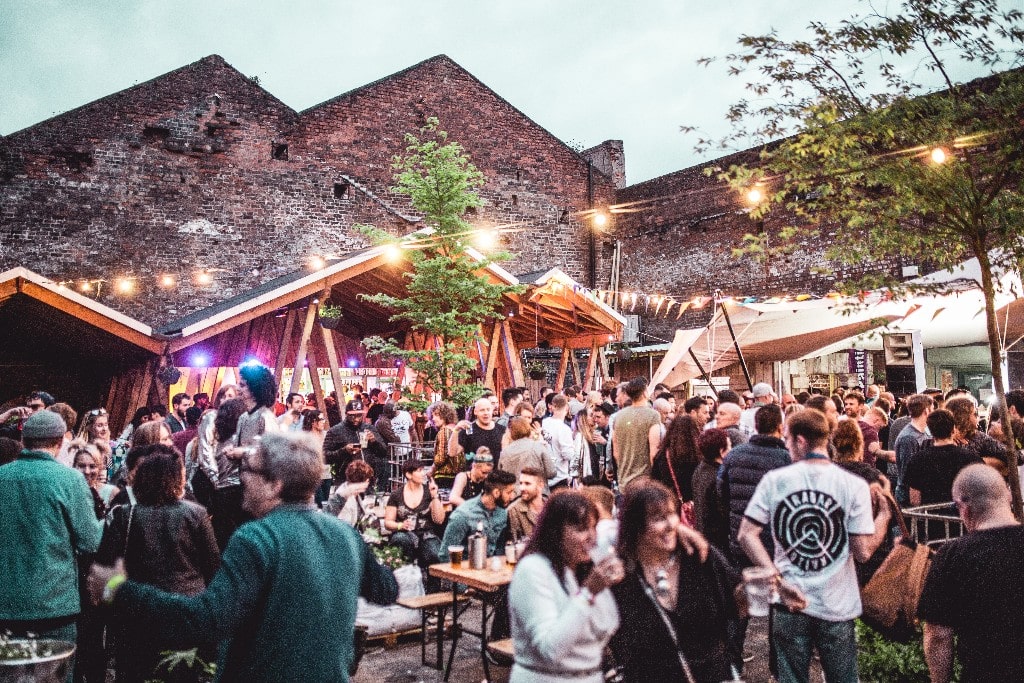
Governance is often the most important, and most overlooked, factor in long-term success. Baltic Creative’s Community Interest Company (CIC) structure embedded local expertise and aligned stakeholders around a clear social mission. Crucially, rental income and asset growth are reinvested into the local creative economy rather than extracted as shareholder profit. This has enabled long-term stewardship instead of short-term asset trading, creating sustainable growth through ownership, reinvestment and a governance model designed to protect both purpose and community over time.
- “Meanwhile use” is a phase, not the model
“Meanwhile space” is often treated as a temporary activation tool, but its real value lies in what it can become. Early activity within the Baltic Triangle relied heavily on temporary occupation and low-cost experimental use. Baltic Creative recognised the long-term potential of this emerging ecosystem and transitioned from informal activation into permanent ownership, structured governance and long-term stewardship. The lesson is to recognise when temporary use has demonstrated genuine value and act accordingly. Meanwhile use should be understood as a starting point, not the end model itself.
- Social infrastructure beats physical infrastructure
What sets Baltic Creative apart is not simply its buildings, but the ecosystem they support. While the fundamentals exist — scalable floorspace, viable rents and good design — the real value lies in enabling interaction, trust and collaboration. Its success comes from fostering chance encounters, shared networks, informal exchange and a sense of belonging within the wider Baltic community. Successful regeneration models do more than provide physical space; they actively cultivate the social infrastructure upon which innovation, identity and long-term resilience depend.
- Growth is not about scaling
Baltic Creative rejects the conventional “scale fast, fail fast” approach that so often weakens local economies. Rather than pursuing growth for its own sake or relying on churn-driven accelerator models, it has focused on retaining and supporting its community over time. Spaces such as Digital House allow businesses to grow within the ecosystem rather than being displaced as they mature. The result is a stable, self-sustaining network where growth strengthens local identity, retains talent and reinforces the wider creative economy.
- The spatial model is simple – expression is everything
The underlying spatial model at Baltic Creative is fundamentally simple: flexible workspace arranged around shared social space. What distinguishes it is not novelty, but expression. Through its authentic industrial character, relaxed atmosphere and layered narratives — from allotment-inspired early-stage spaces to the more mature honesty of Digital House — it offers an alternative to rigid corporate environments. Crucially, tenants are free to shape their own identity within the ecosystem. The lesson is clear: successful spaces express the values and culture of their users.
- Brand and community are intertwined
The Baltic brand is not simply a visual identity applied through design; it is a set of shared values embedded within a wider community. The “Baltic” name carries cultural meaning beyond the buildings themselves, signalling creativity, independence and collaboration. Tenants are not merely customers occupying space, but participants within an evolving ecosystem. By prioritising cultural fit over simple occupancy, Baltic Creative has cultivated a strong sense of belonging and emotional connection, reinforcing both the social resilience and economic value of the wider Baltic Triangle community.

- Retrofit is an advantage, not a constraint
For many startups, sustainability is increasingly a given, creating a growing preference for reusing existing buildings over generic new-build workspace. Baltic Creative’s adaptation of former warehouses and industrial buildings demonstrates how retrofit can become a defining advantage rather than a constraint. Beyond environmental benefits, retained fabric provides authenticity, character and differentiation that resonate strongly with founders seeking alternatives to corporate environments. These qualities contribute directly to the identity of the Baltic Triangle, reinforcing both its cultural distinctiveness and long-term appeal.
- The model evolves, but remains consistent with its values
Although formally established in 2009, Baltic Creative’s roots lie in the earlier countercultural activity of the Baltic Triangle. From informal creative occupation to a mature CIC-led organisation managing multiple assets, the model has evolved significantly over time. Yet throughout this transition, its core principles — supporting independent enterprise, retaining local value, strengthening community and stewarding place — have remained remarkably consistent. This clarity of purpose has built trust and resilience, allowing Baltic Creative to grow and institutionalise without losing its identity.
Conclusion
Baltic Creative demonstrates that successful regeneration is not defined by aesthetics, branding or workspace typologies alone, but by the values and systems that sit beneath them. Its enduring strength lies in its ability to align place, culture, governance and stewardship around a clear social purpose without losing sight of the community it exists to support.
For local authorities, developers and regeneration teams, the lesson is not to replicate Baltic Creative’s physical form, but to interpret its underlying principles in response to local conditions. Authentic creative ecosystems cannot simply be manufactured through design language or “meanwhile” activation alone.
The real challenge is not to create the appearance of creativity, but to cultivate environments where culture, identity and local value can genuinely take root, evolve and endure over time.