
Water has always shaped the identity of our towns and cities. Yet in many post-industrial places, canals and waterfronts have become disconnected from the everyday life they once supported. What were once centres of industry and exchange now often sit at the edge of public consciousness, valued for their heritage but underused as civic spaces. As towns look to redefine themselves, the waterfront presents an opportunity not simply for redevelopment, but for reconnection.
For many post-industrial towns, the waterfront remains one of the most significant yet underutilised civic assets. Once the engine of local economies, canals and dock edges now often sit at the periphery of daily life; physically present but disconnected from the rhythms of the town around them. The challenge is not simply one of regeneration, but of reimagining these inherited landscapes as part of the contemporary public realm.
Across Europe, some of the most successful urban transformations have begun at the water’s edge. From the canals of Amsterdam and Copenhagen to the riverfront districts of Hamburg and Lyon, waterfronts are rarely treated as isolated destinations. Instead, they form part of the everyday city; places where people live, walk, work, gather and encounter one another. Their success comes not from singular landmark interventions but from sustained occupation, active frontages and the gradual layering of uses over time.
The same principles are increasingly relevant in towns such as Runcorn, where the Bridgewater Canal presents an opportunity to reconnect landscape, heritage and town centre activity. Housing plays a particularly important role in this process. Residential development is often discussed in terms of numbers and delivery, yet its wider contribution to placemaking can be equally transformative. New homes introduce activity throughout the day and evening, supporting local businesses, strengthening the viability of services and bringing a degree of permanence to places that have become underused or overlooked.
At Bridgewater Canalside, the waterfront is no longer understood as a boundary between town and landscape, but as a shared interface between the two. Routes become more than connections; they become inhabited spaces, animated through everyday movement and occupation. The simple presence of people living alongside the water fundamentally changes how these spaces are experienced, creating places that feel connected, overlooked and cared for.

This relationship between activity and place has informed our thinking elsewhere. At Bootle Strand, proposals explore how underused waterfront spaces can accommodate a broader mix of community, leisure and commercial activity. Through temporary interventions, public realm improvements and the reuse of existing assets, the waterfront begins to regain its role within the life of the town. Much like the grassroots initiatives explored through Salt & Tar, these projects demonstrate how relatively modest interventions can establish momentum, testing new ideas and creating the conditions for longer-term change.
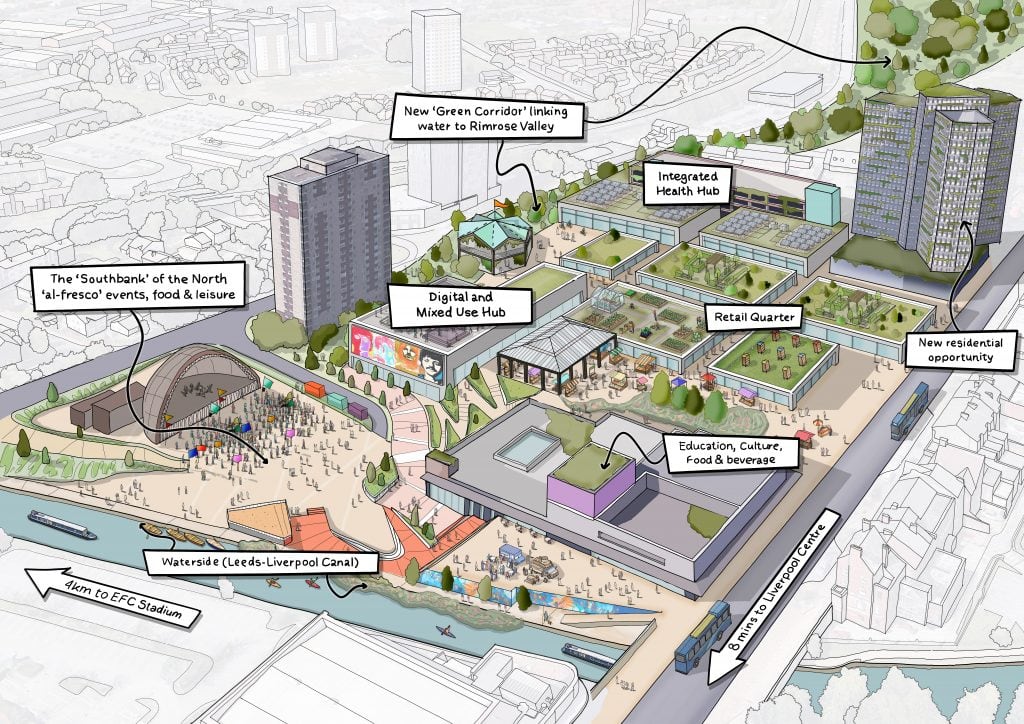
A similar approach sits at the heart of The Pool, where landscape, water and community activity combine to create a destination that feels both distinctive and deeply connected to its surroundings. Rather than treating the waterfront as scenery, the project positions it as social infrastructure; a setting for recreation, wellbeing and shared experience. This understanding of water as an active civic asset, rather than simply a backdrop, offers valuable lessons for towns seeking to rediscover the potential of their own waterfronts.
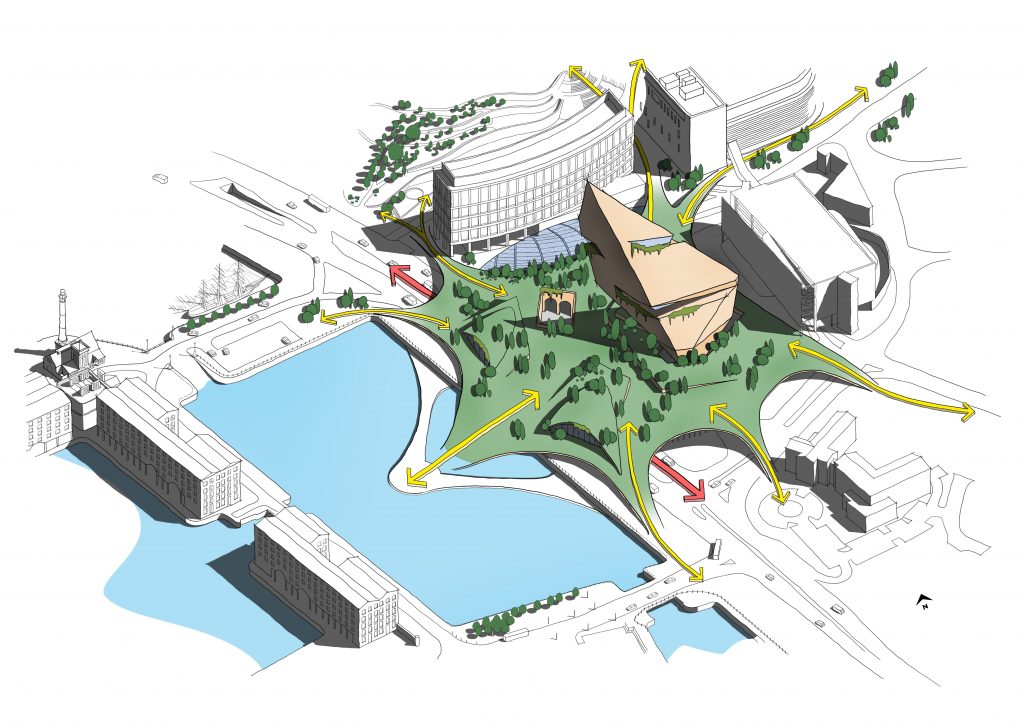
There is also a growing recognition that waterfront environments can make a significant contribution to health and wellbeing. Access to water, green spaces and walkable routes encourages more active lifestyles while strengthening connections to nature within urban settings. When combined with residential uses, these qualities become embedded within everyday routines rather than remaining occasional destinations. The waterfront becomes part of daily life; a place encountered on the way to work, during an evening walk or through informal moments of social interaction. This landscape-led approach can be seen in projects such as Festival Gardens, where a legacy waterfront landscape has been reinterpreted as active civic infrastructure, supporting recreation, ecology and community life while demonstrating how public realm investment can catalyse wider regeneration. Across Europe, similar waterfront transformations have shown how access to water, landscape and public space can become essential social infrastructure, contributing to healthier and more resilient urban environments.

Concerns around safety often accompany discussions about canals and waterfronts, particularly where these spaces have experienced long periods of underuse. Yet experience repeatedly demonstrates that the most effective form of security comes through activity itself. Places that are occupied, observed and regularly used tend to feel safer and function better. Development introduces natural surveillance, creates reasons for people to be present throughout the day and helps transform isolated edges into active public environments.
Ultimately, reclaiming the waterfront is not about creating a new destination detached from the place around it. It is about restoring these spaces to their historic role as integral parts of the urban fabric. Through a combination of housing, public realm investment, meanwhile activity and long-term stewardship, waterfronts can once again become places shaped by everyday life rather than defined by their industrial past.
The opportunity is not simply to regenerate the edges of our towns and cities, but to redefine how they relate to water, creating places that are connected, resilient, and lived in, where the waterfront becomes part of the collective experience of the community rather than its forgotten boundary.