
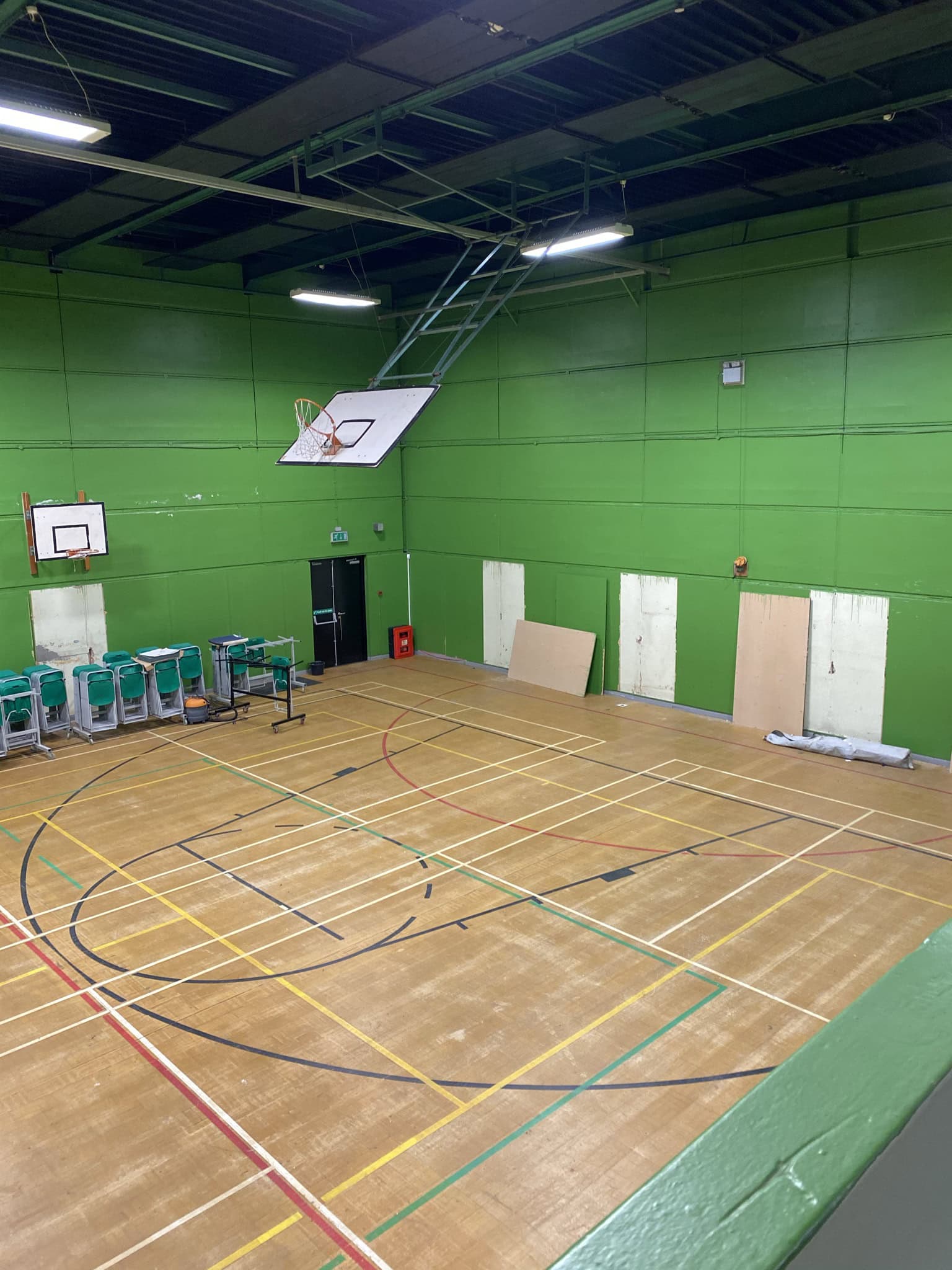
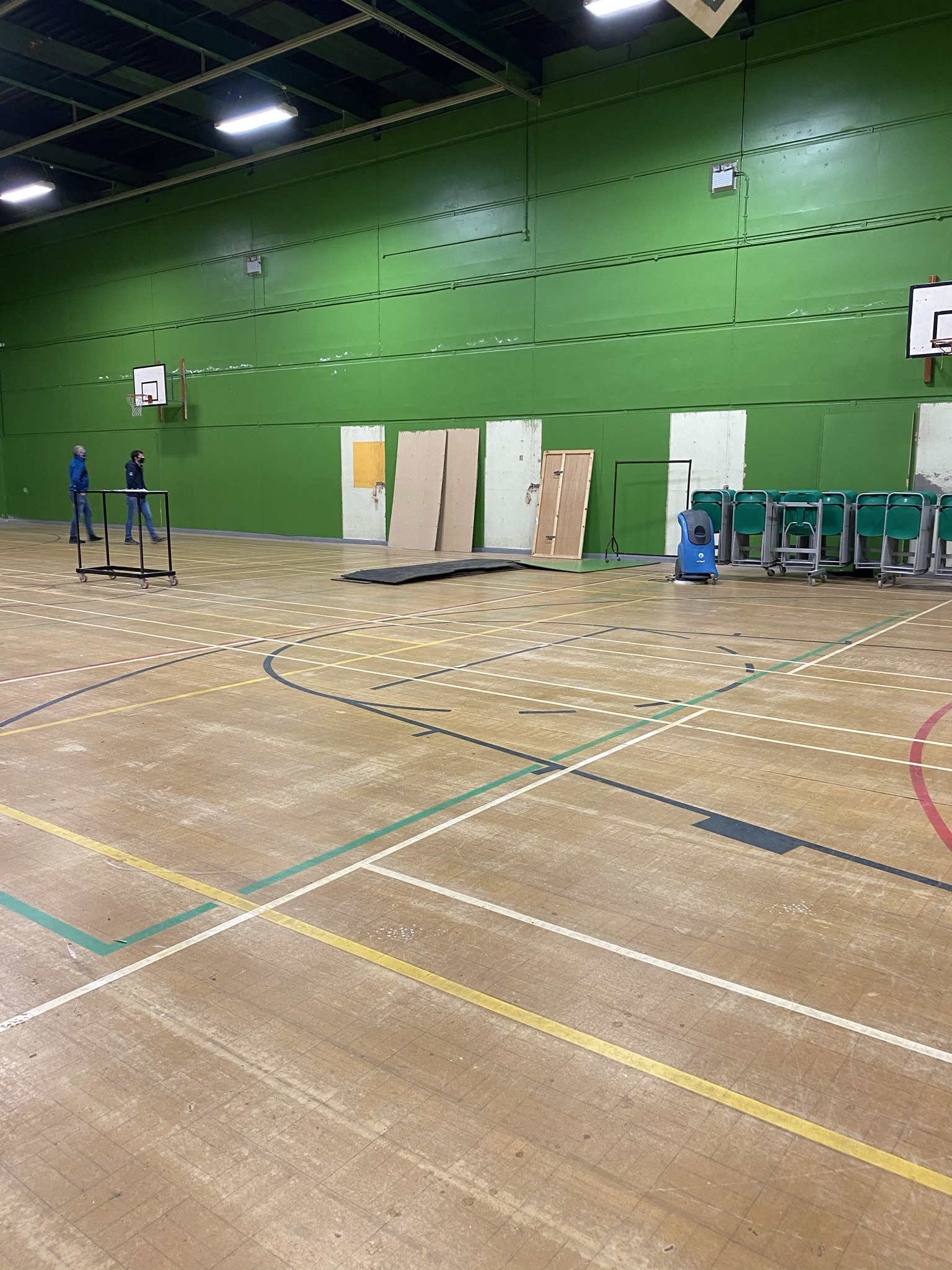
The overriding first impression of the existing sports hall in March 2021 was the vivid lime green colour the brick and concrete panelled internal walls had been painted. Since a new sports hall had been built as part of the school’s new main building completed in 2013, the old hall was underutilised and was far from current Sport England standards. Together with the windowless green walls, the dark soffit and hard floor complete with sports line markings, there was much to address to bring the building back to life.
The scheme is a school refurbishment for the Wardle Academy in Rochdale, completed in late 2021. It is an award-winning and imaginative repurposing of an underutilised 4-court sports hall, creating WaterSHED; new collaborative spaces that challenge traditional methods of construction and flexibility and permanence of teaching spaces.
The client’s vision was to transform the old sports hall to provide vital short-term accommodation, specifically additional learning, dining and social space heading into the new school year.
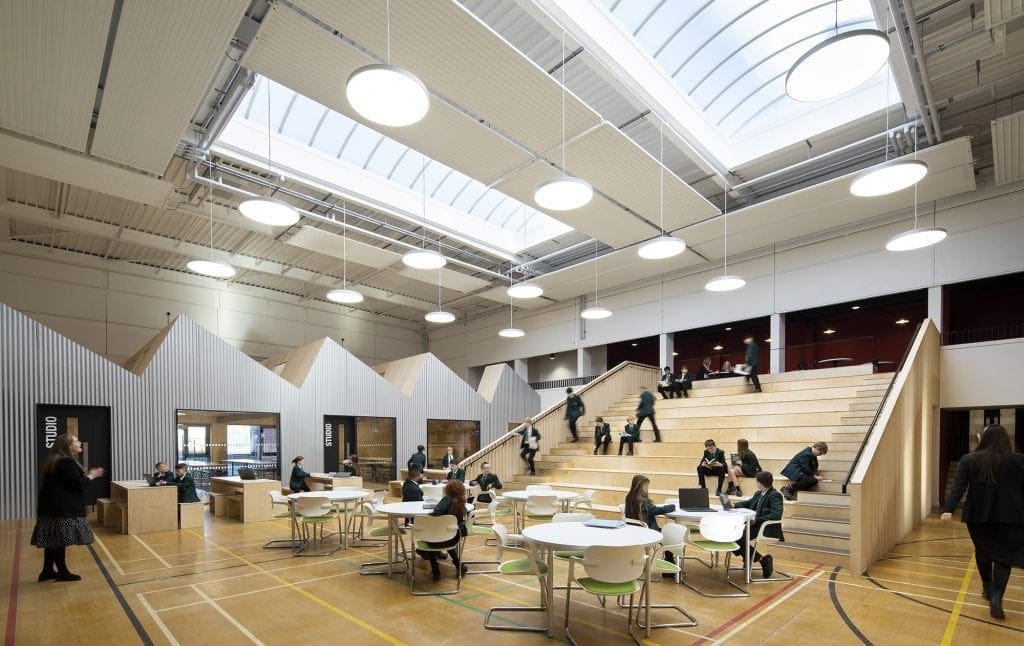
The design response was a ‘learning shed’, a testbed of teaching and social spaces using low-tech, low carbon construction to create flexible learning modules within the existing building envelope. Industry standard sheet sizes of plywood (2440mm x1220mm) would be used to inform the setting out of the wall panels and structural elements, minimising waste and simplifying construction, in a ‘kit of parts’ concept. The strategy also coordinated with the existing 1200mm high concrete wall panels to the hall when creating new window openings.
What the design could not have anticipated was the poor quality of the existing building; the variations in the external wall build up which meant every lintel for every new window had to be bespoke, and the significant level changes in the floor slab. The challenge on site was keeping the abstract perfection of a design concept intact when confronted by reality.
When adapting an existing building, commissioning comprehensive surveys as a starting point is best practice. However, this takes time, costs money and is not always achievable. Sometimes it might be judged disproportionate when working with a simple box, and sometimes you just have to get on site and make a hole in something to find out what it is made of, as was the case at Wardle with the Sports Hall walls and floor.
Buildings and the materials they are made from shrink, expand, settle and twist. Time does this; there is an inevitability about it. Often, they are poorly built to start with, compounding the problem.
Good design should be robust enough to withstand and adapt to foreseeable challenges without being compromised. Understanding building tolerances, thinking about how to articulate junctions between the existing and the new is key in achieving this.
The original Sports hall is formed from a steel frame with modular concrete internal wall panels, possibly a late example of the CLASP building (a prefabricated building system introduced in the 1950s to help with the urgent rebuilding needed after the Second World War).
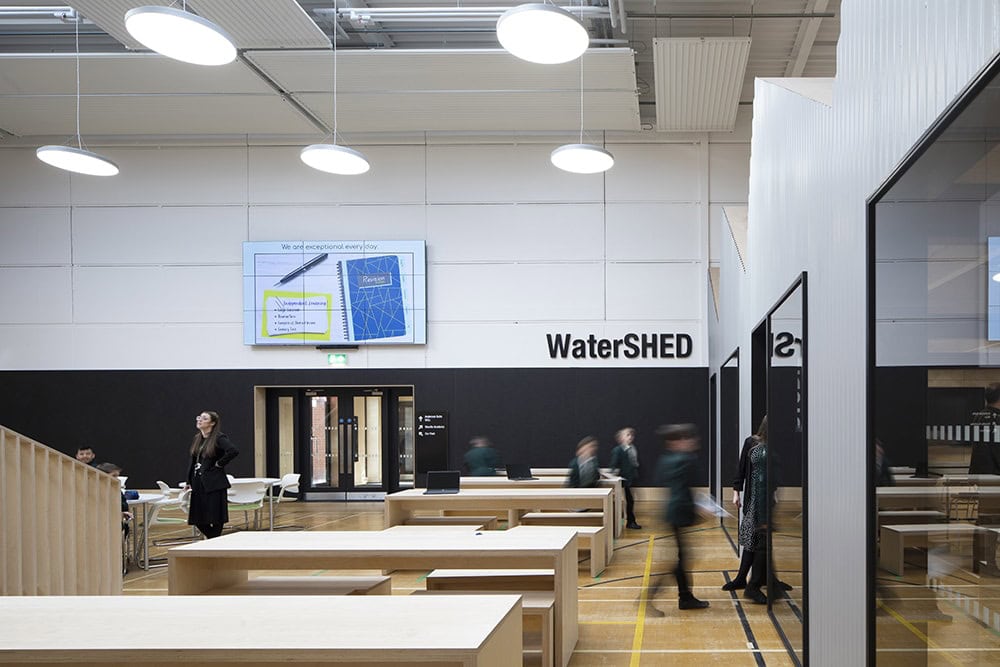
The WaterSHED project could be seen as a modern parallel, looking to address a pressing need for additional capacity with a kit of parts of standard materials and prefabrication to minimise construction waste. However, the crisp new timber sheds and learning steps sit in sharp material contrast to the host building. They are both precise and crafted, yet the birch placed-ply cladding is warm and tactile. Beyond the neutral white overpainting of the lime green walls to help bounce around the natural light from the new rooflights, little attempt is made to hide its rough-edged functionality, most obviously leaving the sports floor markings as a playful echo of its former life.
The 2021 works that created WaterSHED gave a new life, light and function to an obsolete building. The finished result is a sustainable, calm and welcoming environment for learning, and represents an exemplar for adaptive reuse.