What role can materiality play in shaping how people feel at work?
As the Foundation Building evolved into a post-pandemic workplace, the design approach moved beyond functionality alone. Alongside flexibility and hybrid working, there was a growing focus on atmosphere, exploring how colour, texture, furniture and lighting could create a calmer and more supportive working environment.
Rather than reinforcing the rigid character often associated with traditional office spaces, the proposal explored a softer and more human-centred material language inspired by biophilic design principles and domestic interiors.
Could the workplace feel warmer, calmer and more connected to wellbeing?
Across the scheme, earthy and muted tones were introduced to soften the existing environment and create a more welcoming atmosphere throughout the building. Natural greens, warm neutrals and timber finishes helped establish a quieter visual language, moving away from the harsher palettes typically associated with institutional workplaces.
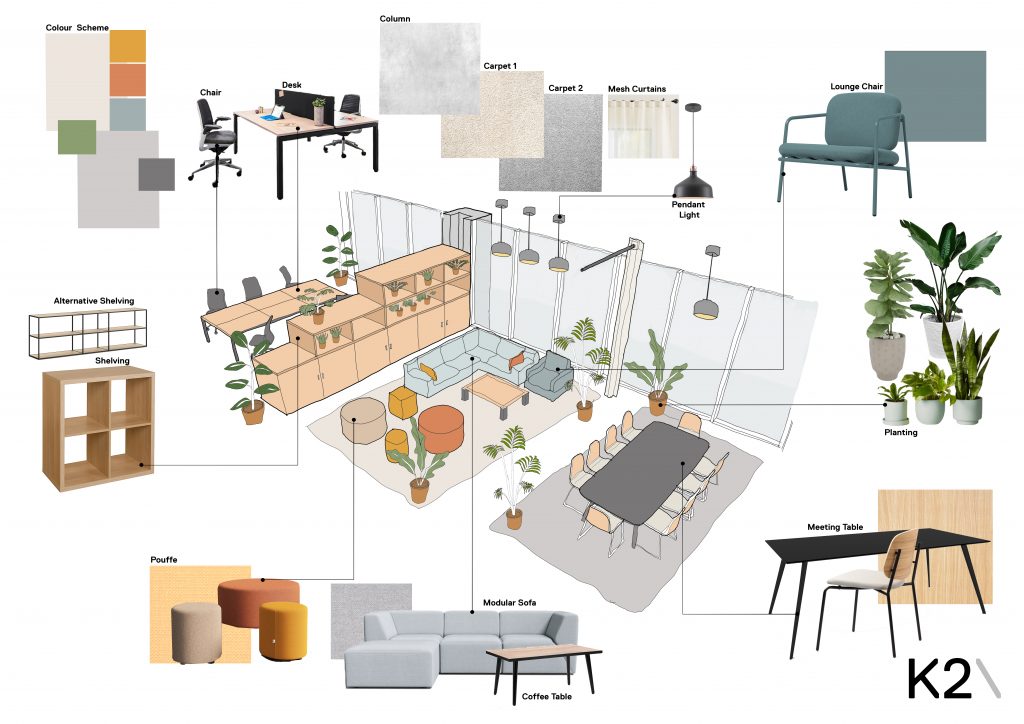
Materiality became an important tool in defining the character of different spaces across the floorplates. Focus areas adopted calmer and more restrained tones to support concentration and quiet working, while breakout and collaborative environments introduced softer textures, layered furniture arrangements and more relaxed settings designed to encourage conversation and informal interaction.
Furniture played a central role in shaping the experience of the workplace.
Rather than being treated as a purely functional requirement, furniture became part of the wider architectural strategy helping establish comfort, flexibility and a more domestic quality throughout the interiors. Lounge-style seating, adaptable layouts and informal breakout areas encouraged staff to move more freely through the building and engage with spaces in different ways throughout the day.
The introduction of open-plan social areas and rejuvenation spaces further reinforced this approach. Planting, softer furnishings and informal gathering settings created moments of pause within the working day, allowing staff to step away from their desks and reconnect in more relaxed surroundings.
Lighting and material contrast were also carefully considered across the proposal. Collaborative areas adopted brighter and more open settings, while quieter spaces used softer textures and subdued tones to create more reflective environments suited to focused work and retreat.
Rather than relying on strong physical divisions, these quieter architectural interventions helped define spaces through mood, texture and experience.
The result is a workplace that feels less corporate and more restorative an environment shaped around wellbeing, adaptability and everyday human experience.