The pandemic changed more than where people worked; it changed what people needed from the workplace. COVID-19 forced organisations to rethink how buildings support health, wellbeing, collaboration and flexibility. Traditional office layouts, fixed desks and ageing building systems no longer reflected how people wanted (or needed) to work.
At the University of Liverpool, that shift became the catalyst for a major transformation of the Foundation Building.
Located between the Liverpool Metropolitan Cathedral and the Victoria Gallery & Museum on Brownlow Hill, the Foundation Building was first earmarked for ventilation improvements after the pandemic. The initial aim was simple: create a healthier environment and help staff feel comfortable returning to the workplace.
But as the project developed, a bigger question emerged.
What should the post-pandemic workplace actually feel like?
As part of the University’s wider campus vision, we were commissioned to explore how the linear wing of the Foundation Building could become a more adaptable, people-focused working environment. The existing workspace did not support the University’s hybrid-working ambitions and lacked dedicated areas for staff to relax, connect and take breaks. In response, the project focused on creating settings that encourage interaction, adaptability and new ways of working.
To enable this shift, workplace occupancy was reduced to around 40% of pre-pandemic capacity, replacing desk-heavy layouts with a broader mix of shared and flexible spaces.
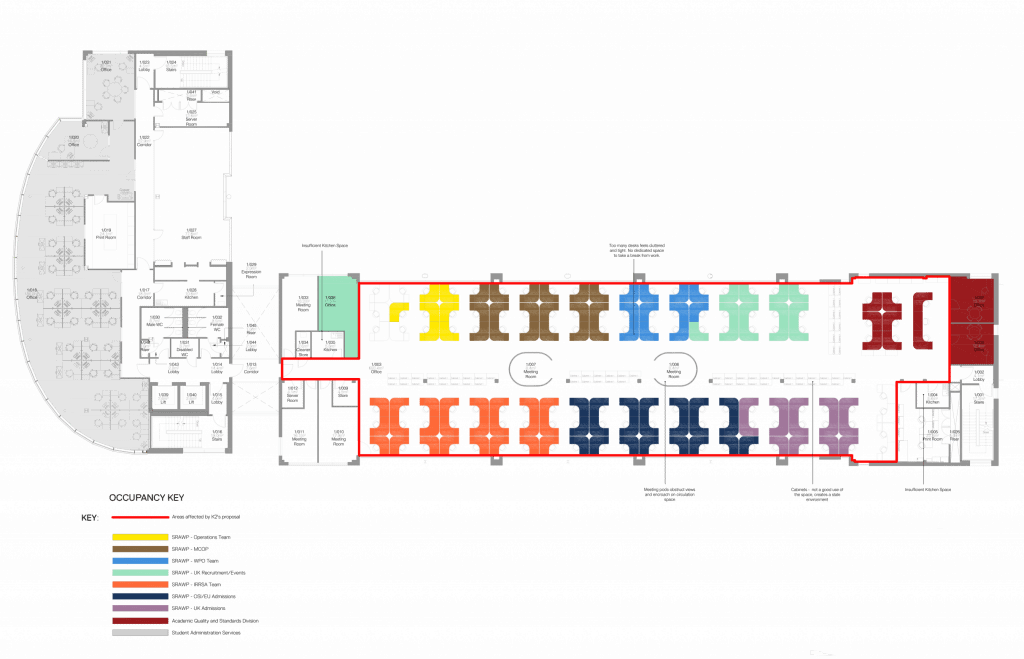
One of the first things that became clear through the design process was how rigid the existing workplace felt. Long rows of fixed desks and enclosed working patterns limited interaction between teams and offered very little flexibility in how the building could be used day to day.
Could the workplace become less about desks and more about experience?
Rather than organising the floors around static layouts, the proposal introduced a series of interconnected workplace zones designed around different ways of working. Quiet focus areas, collaborative team spaces, breakout settings and rejuvenation spaces were distributed across each floor, creating a more fluid and adaptable workplace experience.
The aim was not simply to modernise the office, but to rethink how people move through and experience the workplace altogether. Spaces were designed to feel less corporate and more human-centred encouraging informal interaction, collaboration and moments of pause throughout the working day.
 Open-plan kitchens became important social anchors within the building, helping improve connectivity and encouraging more informal communication between staff. Flexible spatial interventions and adaptable furniture arrangements allowed spaces to shift naturally between focused work and collaboration without relying on permanent boundaries.
Breakout and rejuvenation spaces became central to the proposal rather than secondary additions. These spaces were designed to support wellbeing, allowing staff to step away from their desks, recharge and reconnect throughout the day.
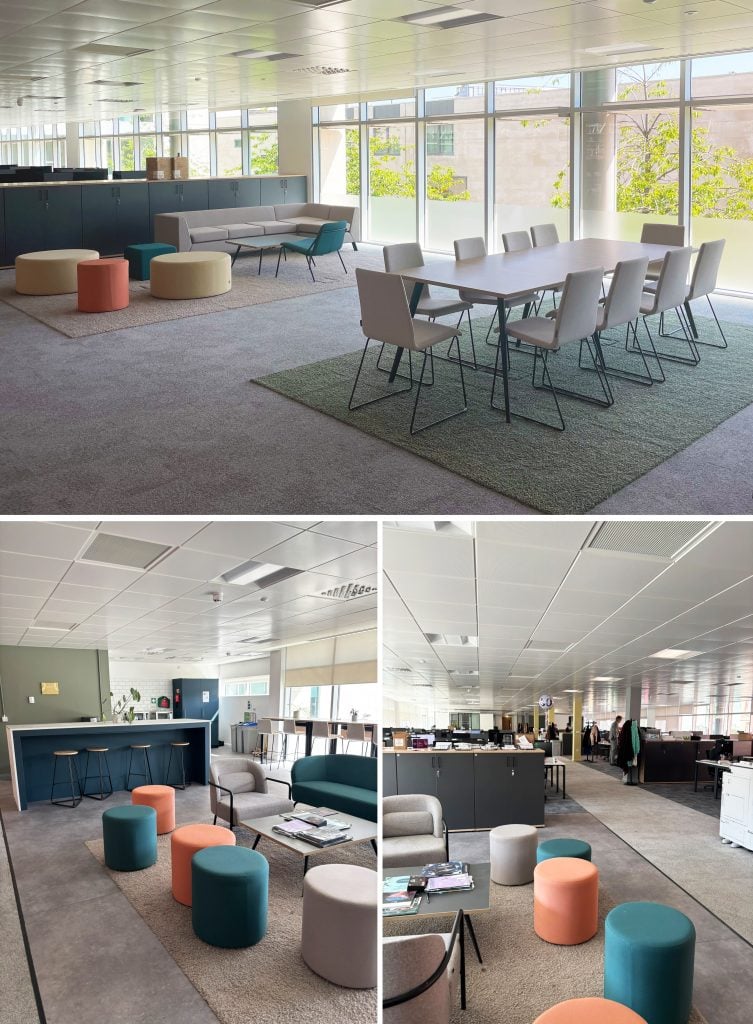
What emerged was not simply a refurbished office, but a workplace shaped around flexibility, interaction and wellbeing.
More than a refurbishment project, the Foundation Building demonstrates how existing university buildings can be carefully rethought to support changing patterns of work and campus life long into the future.