As part of the wider transformation of The Coro, we were asked to explore how the building could support a broader civic role within Ulverston — one that extends beyond performance and evening events to become part of everyday community life.
The relocation of the library became central to that ambition.
Rather than treating the library as a separate facility inserted into the building, the proposal explored how it could become a social and cultural anchor within The Coro itself — a space that encourages interaction, learning and informal occupation throughout the day.
Could the library help reactivate the building beyond performance hours?
Historically, libraries have acted as some of the most accessible civic spaces within towns and cities. They provide places not only for reading and learning, but also for gathering, working, resting and connecting with others. The proposal sought to build on this idea by integrating the library into the wider life of The Coro, allowing culture, community and everyday activity to coexist within the same building.

The first-floor library spaces were positioned to benefit from natural light and views across Victoria Street, helping create a more open and welcoming environment for visitors. Flexible activity areas were introduced alongside the library to support workshops, community events and informal learning, allowing the spaces to adapt to changing patterns of use over time.
Could the library become something different after hours?
Rather than designing the library as a static and fixed environment, we explored how the space could transform throughout the day in response to different forms of occupation and community use.
During daytime hours, the space functions as an open and welcoming library environment supporting reading, learning and informal community activity. By evening, elements of the library can be carefully stored away, allowing the same space to transition into an adaptable setting for exhibitions, events and wider cultural programming.
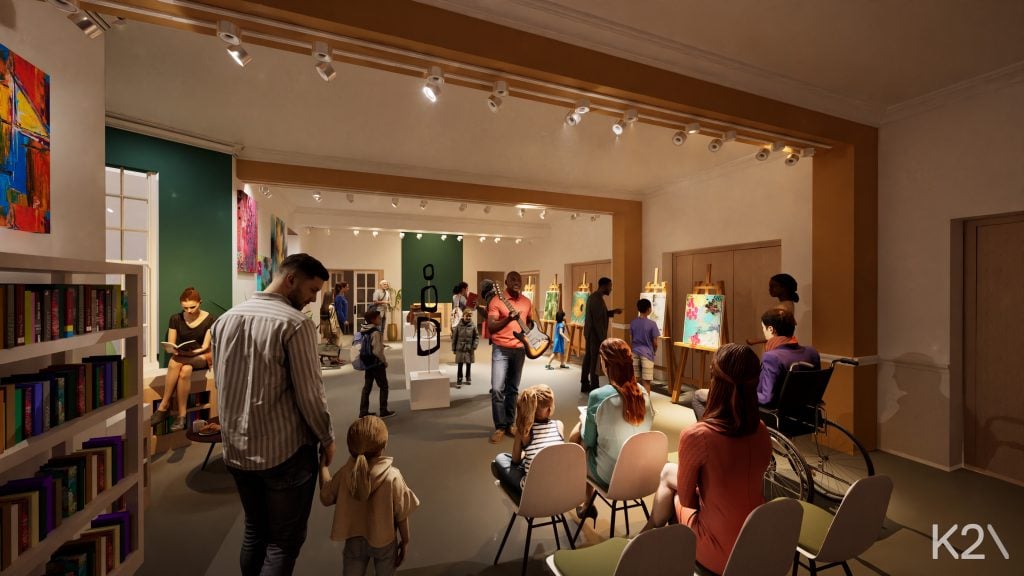

This flexibility allows The Coro to support a broader range of activities without requiring additional dedicated spaces, helping the building remain active throughout the day and into the evening. Rather than designing fixed-purpose rooms, the proposal explored how adaptable and shared environments could encourage interaction between users while creating a greater sense of openness across the building.
Accessibility and inclusivity also became key drivers throughout the project. The library was envisioned as a civic “heart space” within The Coro an informal and approachable environment that supports a wide range of people, ages and community groups.
Rather than functioning as a fixed programme, the library becomes part of a broader civic landscape within The Coro: flexible, shared and capable of evolving alongside the needs of the community.