This first phase of The Strand Transformation project is about creating immediate impact and changing perception, a place-based approach that will win the hearts and minds of the people of Bootle and demonstrate positive change is coming to the Strand. This includes the removal and demolition of existing structures to reconnect the Strand back to Stanley Road and open accessibility and vistas of the Canal and Canalside.
The strategic location of the former M&S (Building 1) signifies the importance of the building within the Strand and the wider transformation. By demolishing the Stanley Road retail to the north, this creates a new town square, street scape and public realm, opening up Mons Square to the canal beyond. Further opening of the southwest façade at Washington Parade level, connects the building to the Canal and Salt & Tar.
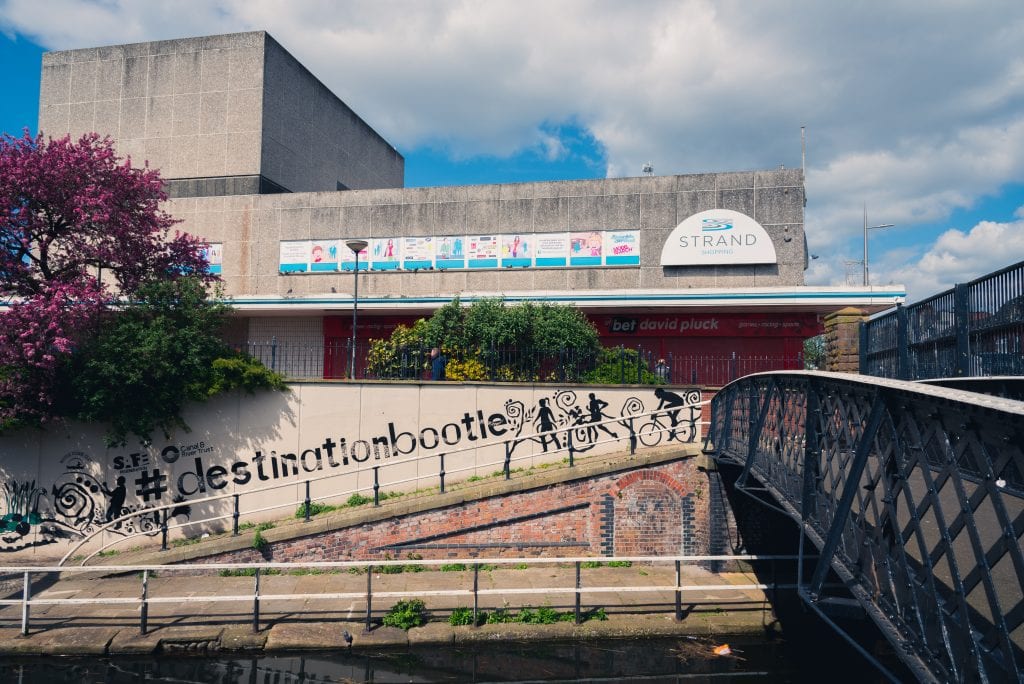
The Strand shopping centre embraced a Brutalist architecture movement of the 1960s. Building 1 was constructed with reoccurring modular elements representing specific functional zones, distinctly articulated and grouped together into a unified whole. There is often an emphasis on graphic expressions, such as the exposed aggregate precast concrete panels across the external elevations, this is particularly reinforced with the first and second floor rectangular ‘monolithic’ beacon, and exposed concrete columns and beams that is expressed in the architectural plan in regard to the main functions and people-flows of the buildings.
The architectural approach to the emerging design is to express the former M&S and retain the Brutalist nature of the building, whilst balancing any new architectural interventions and apertures in the facades, allowing the user to understanding the buildings past, present and future.
Building 1 has a concrete frame set across a grid that has good flexibility to allow for repurposing. It also holds the most amount of embedded Carbon in its structure and foundations, so retaining it makes sense from the sustainability aspirations.
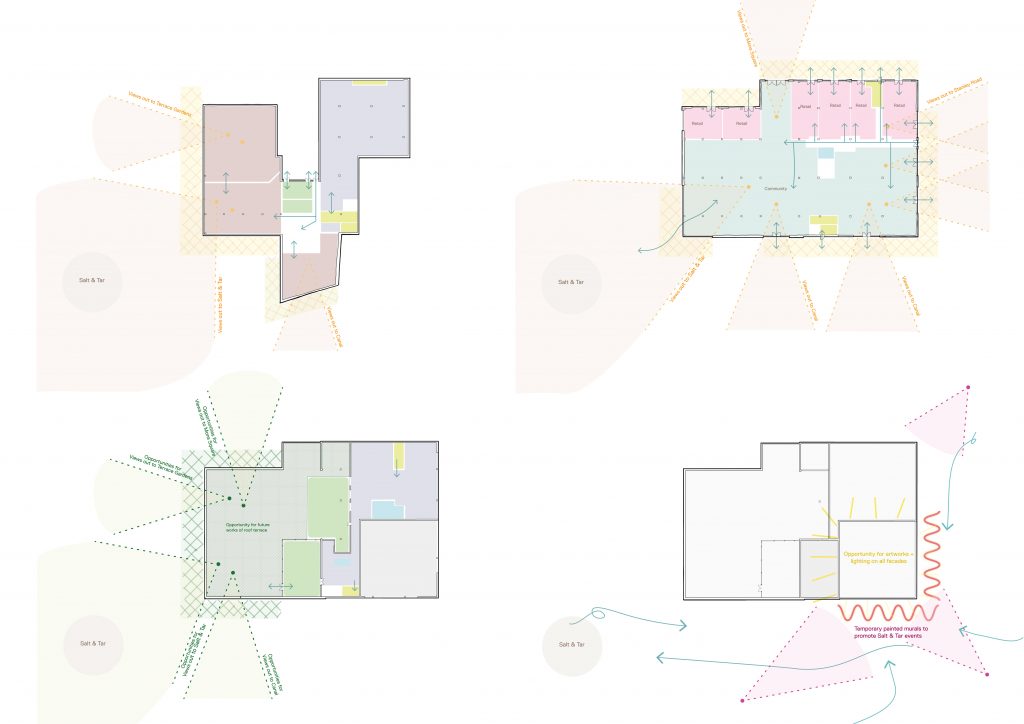
Embedding and softening Building 1 in its surrounding public realm is also a key priority, whilst opening up the facades to the public realm to break down the defensiveness of the building and blur the boundaries between building and landscape. This strong emphasis on creating a high-quality Public Realm is a key objective that will enhance the sense of civic pride and ownership by the community.
It is recognised by the Client and the Design Team that a place-based strategy to phase 1 is the correct approach, in order to create the environment and conditions for the long-term sustainability of the Strand. However, this is likely to create commercial challenges, ensuring a balance between a place-based approach as it cannot be wholly occupier led or it will not be sustainable with the local community long term.