
The existing concrete slab at The Wellsprings, Bolton, was never designed to be seen. There had been discussions during the design process of how we would finish the spaces once the existing ceiling was removed. Would the slab be suitable for exposure? Would we reinstate a ceiling like-for-like? How could we transform the existing low, cramped spaces into something more open and inviting?
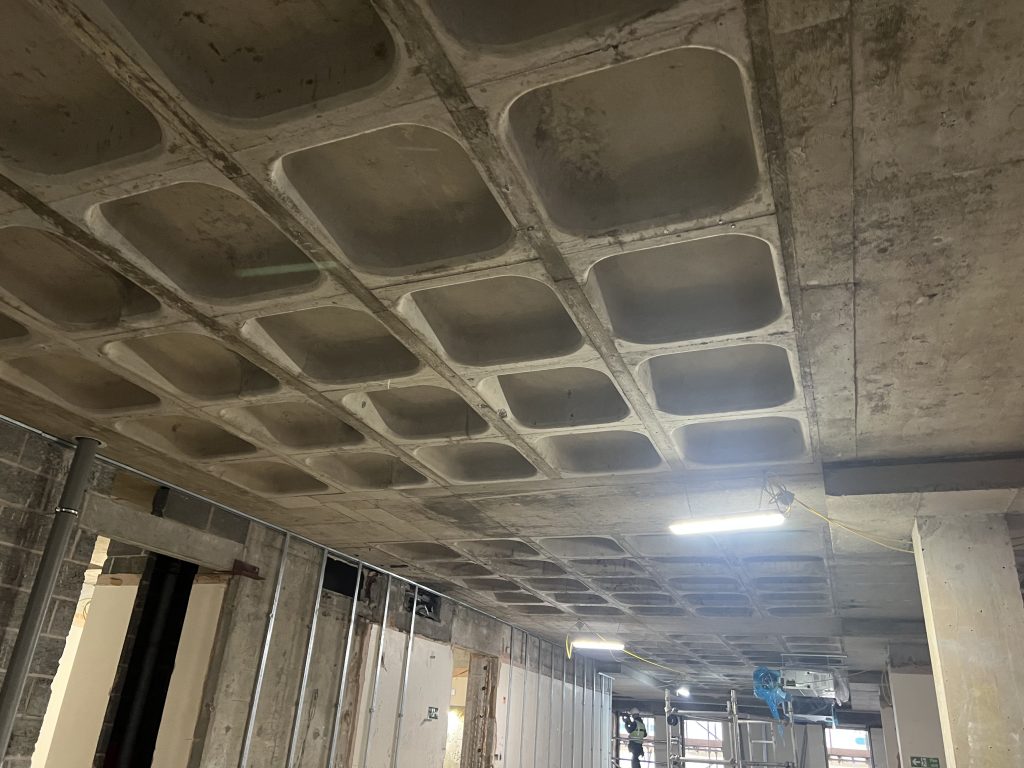
Standing on site as the suspended ceiling came down, the assumption on previous jobs would have been simple: it would be lined, painted, and softened. But once the waffle slab was fully exposed, it was raw, patterned and imperfect. The ceiling suddenly had depth to it, creating a new industrial feeling across the space.
This project is the retrofit of a 1970s office building in the heart of Bolton, completed in summer 2024. The ambition was to create a more efficient floorplate, moving away from sterile, cellular offices toward collaborative, open-plan working environments.
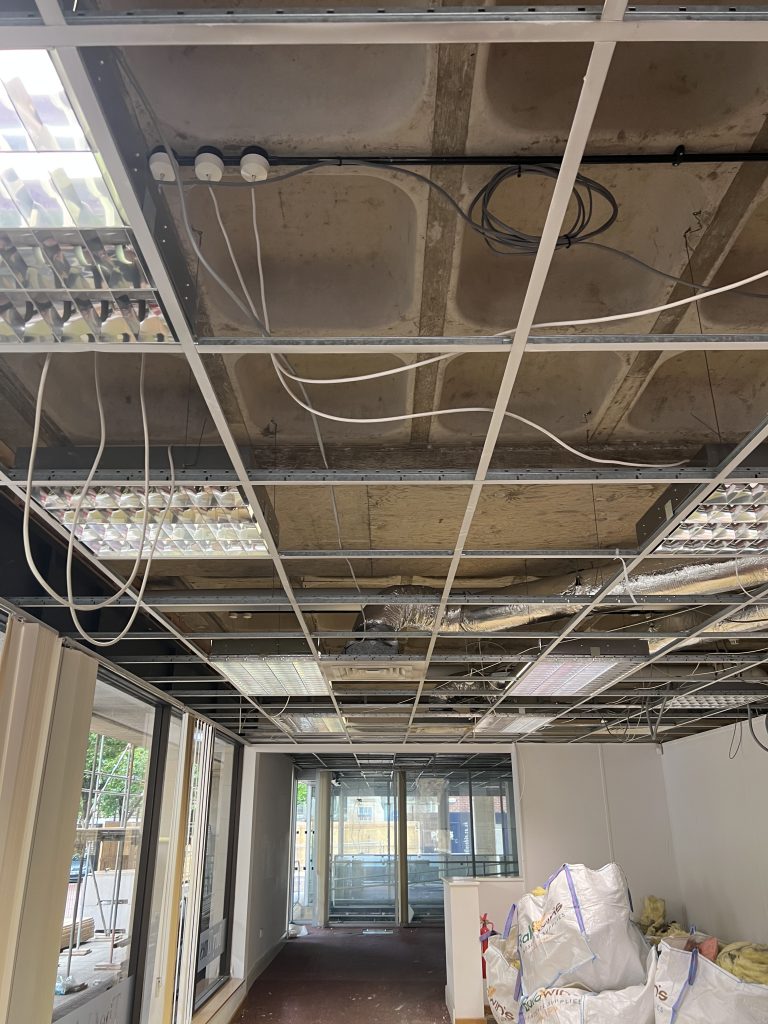
Like most waffle slabs, it was chosen for efficiency: structural performance, longer spans, and fewer columns. A practical decision, not an aesthetic one. At least, not initially.
Once uncovered and fully surveyed on site, it became clear this was an element of the existing building worth celebrating.
The grid of coffers brought an unexpected scale to the room. It wasn’t delicate, but it was ordered. The slab held the memory of its making: slight inconsistencies between pods, traces of the pour, edges that weren’t perfect. All the things we typically try to conceal in existing buildings were instead giving this project character.
Exposing the slab meant accepting its flaws. It meant committing to a ceiling that wouldn’t be smooth, neutral, or easily controlled. It also meant acknowledging that the structure, something often treated as background, could take on a more active role in the space.
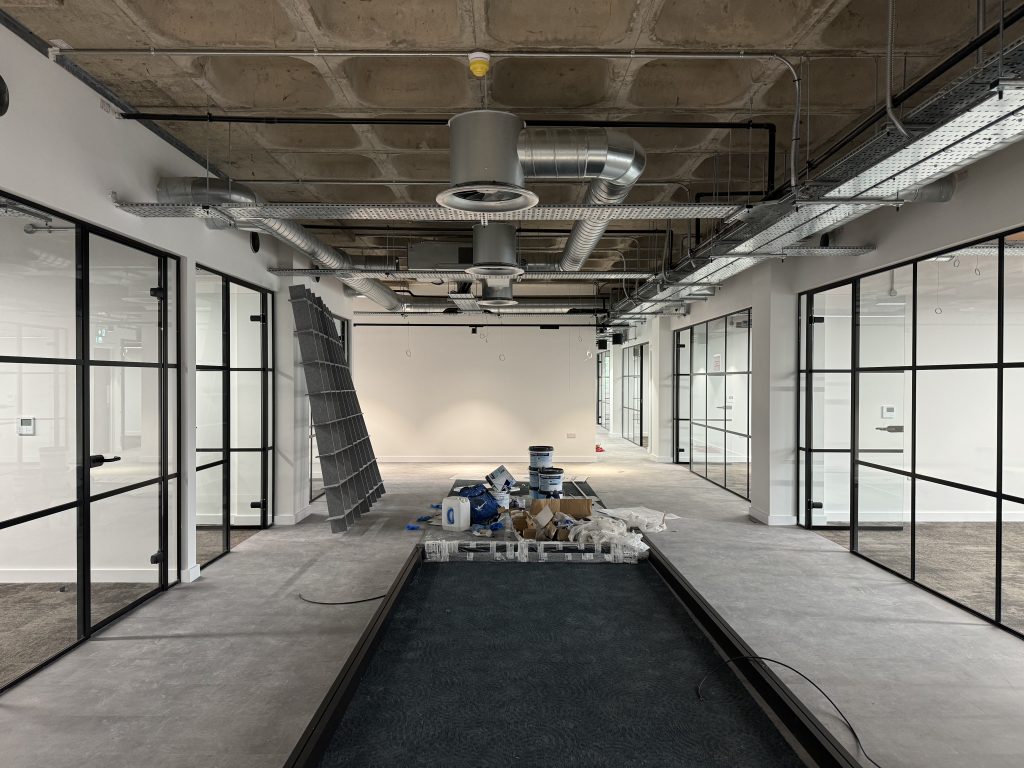
There were practical reasons to retain it. Leaving the slab exposed reduced additional materials and finishes. It allowed for the mechanical and electrical elements to be exposed, creating a higher floor-to-ceiling height than previously, providing comfortable open areas for collaboration. It also simplified junctions that would otherwise require suspended ceilings or secondary linings.
This taught me that details and design don’t need to be perfect or clean to create an exciting space. There’s something honest about allowing a building to show how it stands up. The waffle slab doesn’t pretend to be anything other than what it is. It carries the load, spans distance and helps clearly define the rooms at the same time.
There were, of course, initial hesitations – from the client, the wider design team, and internally. Would it feel too industrial for a workplace? Would it dominate the space or distract from what happens below? Would people feel comfortable working beneath it?
In this case, the slab provides a different warmth that doesn’t only come from finishes. Light moving across concrete, furniture occupying the space below, life filling in the grid set out.
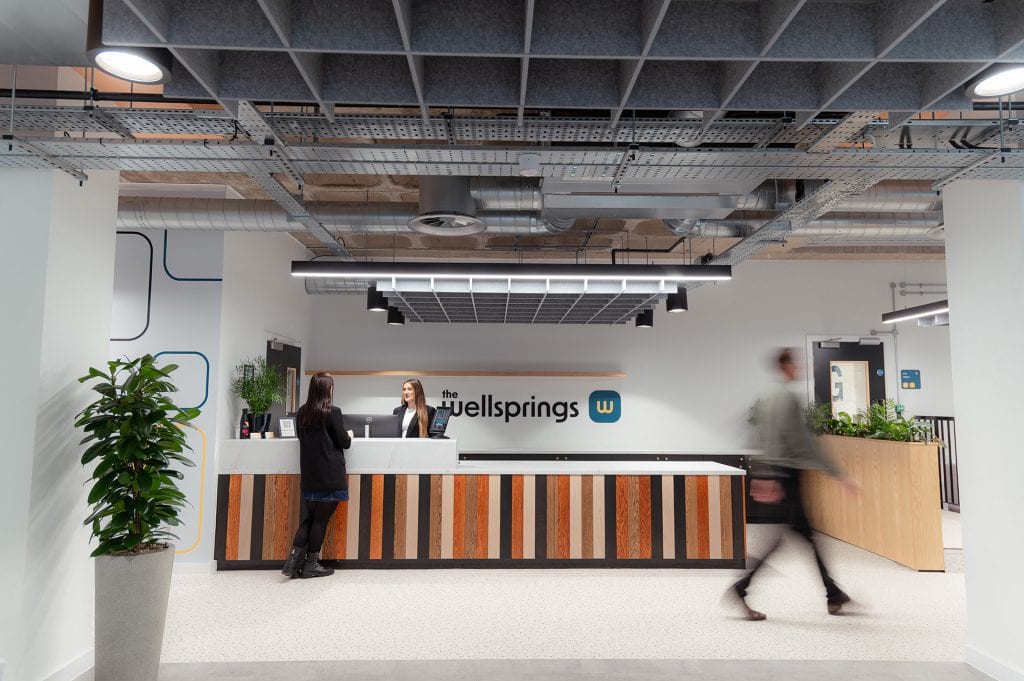
What ultimately convinced us was how the slab anchored the space. It gave the rooms a quiet authority. Nothing else was needed to compete with it. Services, lighting, and collaborative areas could all be set out in response to the grid above.
The waffle slab remains exposed now, sealed but otherwise untouched. It isn’t perfect, and that’s part of its value.