Accessibility is too often reduced to a checklist. In the UK, Part M compliance, or Doc M building regulations sets a legal baseline, ensuring that a building can be entered and navigated.
But true accessibility is far more nuanced and extends far beyond compliance. It’s not only about what people can do in a space; it’s about how spaces feel, how they resonate with identity, and how they enable participation without stigma.
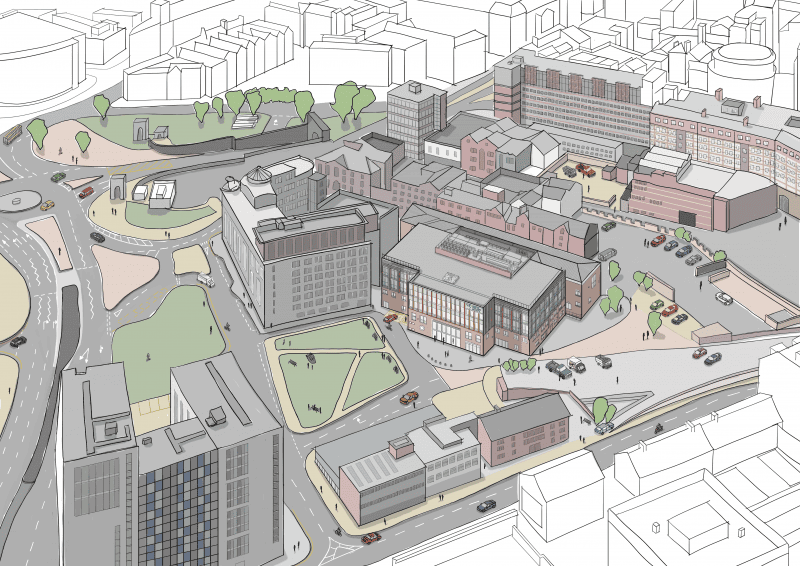
Completed in early 2026, the project refurbishes and extends Heywood’s 1960s civic venue through a comprehensive £5.5 million transformation. At its heart is a modern, flexible and fully accessible 500-seat multi-purpose performance space, complemented by a new community café that opens directly onto Peine Square. While the intervention celebrates the building’s architectural heritage, it also repositions the Civic Centre at the heart of Heywood’s town life, enabling an expanded programme of performances, exhibitions and community events.
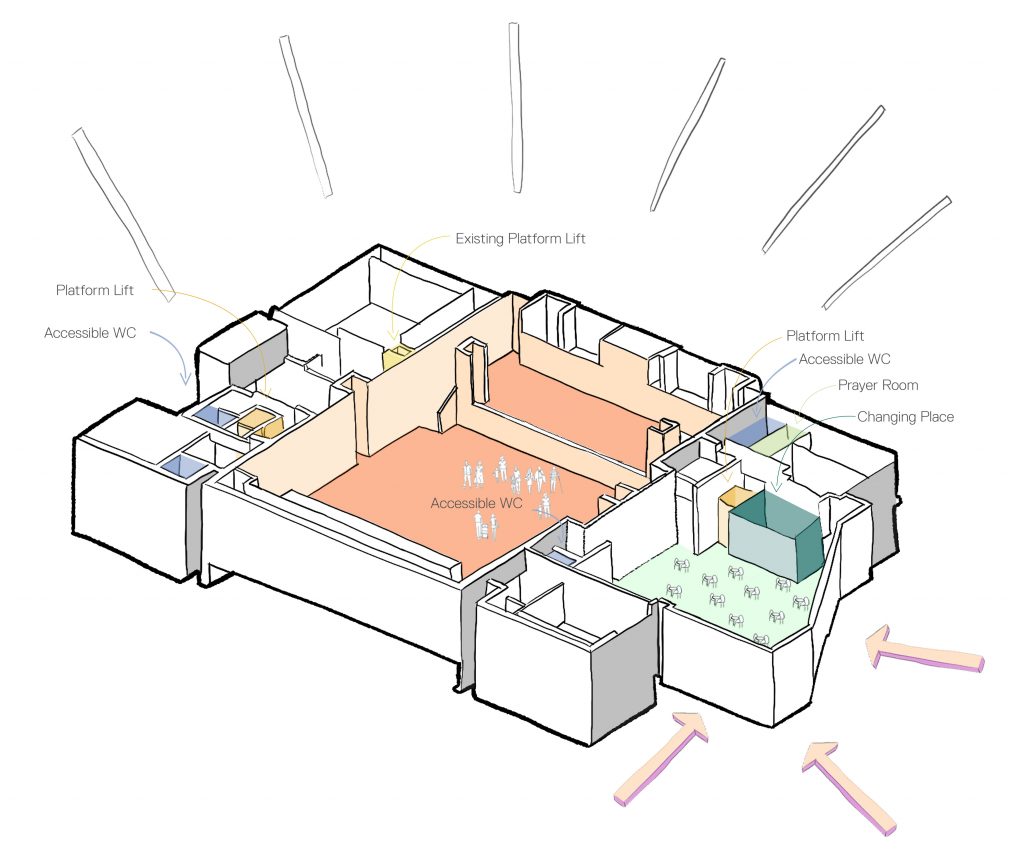 Equally important is the transformation of the building’s accessibility and public interface, ensuring that the Civic Centre can be experienced and enjoyed by the whole community. The project introduces lift access to all upper floors, including level access to the stage, increases the number of accessible WCs, and includes a front-of-house changing places facility. These interventions meet Part M, but they are only the starting point.
Community consultation informed further enhancements. A softly lit multi-faith room promotes calm and reflection, while accessible back-of-house changing rooms and showers ensure performers of all abilities can fully participate. This philosophy of inclusivity is both practical and socially considered.
Historically, accessible facilities in public buildings have often been utilitarian, clinical spaces that feel othered and visually disconnected from their surroundings. At Heywood, accessibility is treated as a design opportunity. Accessible WCs and changing areas are integrated seamlessly into the interiors, demonstrating that inclusivity can coexist with beauty and craft. Materials, lighting, and spatial arrangements are chosen for comfort, dignity, and sensory richness whilst meeting the required light reflectance values and maintaining the same level of interior design quality as the rest of the building. These spaces echo the building’s colour palette and material choices, making them feel fully integrated, considered, and visually engaging.
 Curated interior design moodboards
Every detail supports navigation without overwhelming the senses.
Light, colour, texture, contrast, and acoustics guide movement naturally. Timber panelling, acoustically rated ceilings, and subtle finishes add tactility while complementing the building’s civic presence. Spaces are intuitive, legible, and predictable, reducing complexity and making the Civic Centre feel welcoming.
Designing inclusively isn’t just thoughtful; it’s future-proof. Buildings that ignore this risk obsolescence. Those that embrace it shape civic life in ways that are meaningful, enduring, and human.