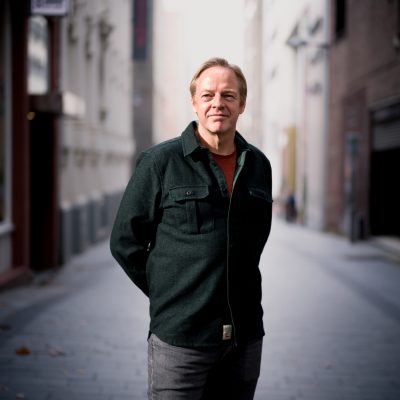
Three individuals who turned a simple idea into a lasting institution

Purpose
This piece is the first in a series exploring how creative and digital workspaces are evolving from straightforward property products into something far more significant: social and innovation infrastructure.
Introduction
In 2023, Time Out named the Baltic Triangle “the coolest neighbourhood in the UK” and ranked it 11th globally. Once described as “a collection of largely abandoned shipping warehouses,” it is now home to some of Liverpool’s most dynamic restaurateurs, artists and creative businesses and a place where the city’s younger energy is most visible.
This transformation did not happen overnight. It represents the gradual institutionalisation of a simple but powerful idea: reoccupying underused urban space through “meanwhile” use.
This is the story of how Baltic Creative evolved from that idea into an internationally recognised model for regeneration. It examines how three individuals, each bringing a distinct perspective, helped turn an organic cultural movement into a structured, resilient and influential ecosystem.
At its core, this is not just a story about buildings. It is about how culture, governance and enterprise can combine to shape identity, create opportunity and sustain communities over time.
Background
The Baltic Triangle has long been defined by change. In the 19th century, it was a centre for timber trade, Scandinavian migration and a modest whaling industry – hence its name.
Following the Second World War and the decline of Liverpool’s industrial base, the area fell into disuse. By the early 2000s, it had become associated with dereliction and, at one point, was considered for designation as a managed red-light district.
Yet within this decline, a different kind of activity was emerging. Informal music events, underground gigs and creative experimentation began to take root in vacant warehouses. Low rents and a sense of freedom attracted artists, musicians, designers and digital start-ups. A grassroots creative ecosystem was forming.
But it remained fragile, loosely connected and largely under the radar, known only to those within it. For it to take shape and endure, it needed leadership: someone to champion its potential, nurture its ambition and secure its future.

Cultural Renaissance
A key turning point came with Jayne Casey, a former punk musician and a central figure in Liverpool’s cultural scene. As artistic director during Liverpool’s European Capital of Culture 2008, she championed the use of Baltic’s underutilised spaces for creative activity.
Her core principle was both simple and powerful: to let cultural activity shape identity from the ground up, rather than imposing a predetermined template from above.
Through initiatives such as A Foundation, she helped establish a pattern of cultural activation within the Baltic Triangle: embedding exhibitions, performances and events within disused buildings. Beginning in the early 2000s, this work explored the idea that culture could lead regeneration, rather than follow it; a principle that would only become fully evident in the years that followed.
Crucially, she recognised the risk of gentrification. As the Baltic Triangle’s reputation as a cultural destination grew, so too did the likelihood that commercial development would displace the very community that had given it life.
Her vision was clear: securing cultural communities’ long-term future required more than activity alone; it required ownership. To protect what had emerged, the community needed to control its own land and property, but to be credible, it also needed the structure, governance, and stability it had so far lacked.

Baltic Creative CIC
Erika Rushton played a pivotal role in this transition. With a background spanning art, enterprise and social housing, she brought a rare combination of skills developed over 14 years as Enterprise Director at Plus Dane Housing Group. She was able to bridge the gap between cultural ambition and institutional delivery, crucially securing the public funding needed to turn the idea into a viable, long-term proposition.
Under her leadership, Baltic Creative was established as a Community Interest Company (CIC) in 2009, with a mission to secure funding and provide affordable, long-term workspace for creative businesses. Erika assembled a diverse board of like-minded influencers, drawn from the public, private and community sectors, to guide and support the vision.

Scaling the Vision
The final piece was operational delivery. In 2010, Mark Lawler joined as Managing Director, bringing experience in development management at Plus Dane and hands-on small-business ownership in a surf-lifestyle franchise, giving him a strong understanding of brand positioning.
His role was to translate the vision into a working model. Early efforts focused on practical challenges: refurbishing vacant buildings, building occupancy, and proving that the CIC model could be both commercially viable and socially impactful.
Over time, the focus shifted. Baltic Creative evolved from managing a property asset to shaping an ecosystem built on a brand that positioned itself firmly at the intersection of culture and innovation.

Creating Growth Through Social Infrastructure
The organisation’s real value lay not in its buildings, but in the relationships they enabled. Innovation depends on collaboration; collaboration depends on trust; and trust develops through a culture of proximity and shared experience.
Baltic Creative became a connector, bringing together start-ups, creatives, and entrepreneurs who shared similar values within a curated environment. Tenants were not simply occupiers; they were part of the brand itself. Alignment of values became an essential ingredient of success, and growth was guided by their careful curation.
This demonstrated a key principle: successful creative ecosystems are not accidental. They require intentional design, stewardship and long-term thinking.
Scaling the Ecosystem
By its tenth anniversary in 2019, Baltic Creative’s portfolio had grown to around 10 sites and more than 120,000 sq. ft of workspace, supporting approximately 170 businesses.
What’s more, the area was gaining widespread international recognition, regularly cited by publications such as Time Out, The Telegraph and Monocle as an essential, offbeat destination for the adventurous traveller – in other words, it had become somewhere to be seen and experienced.
More importantly, it had achieved something rare: longevity. It was no longer a temporary intervention, but a visible and enduring model of community-led regeneration. It is unlikely that a speculative developer could have generated the same level of global recognition as the grassroots creative community that came to define it.
Social Resilience
This resilience was tested during the COVID-19 pandemic. While physical spaces were closed, Baltic Creative leaned into its role as a support network, offering guidance, maintaining connections and moving activity online. In doing so, it adapted into a hybrid model.
Rather than weakening the physical infrastructure Baltic Creative had developed over a decade, this period ultimately reinforced it. Many tenants returned post-lockdown, suggesting that the value of place, when underpinned by strong social connections, remains resilient even in a hybrid world.

The Future
As predicted, wider speculative development has followed its success. Yet the original vision has endured. Through collective ownership, strong governance and a continued commitment to its founding principles, the area’s cultural identity has been protected.
Baltic Creative is no longer an insurgent force; it has become an established and resilient institution, and with that comes the need for a different kind of leadership. With their roles in this chapter complete, Jayne Casey, Erika Rushton and Mark Lawler have moved on to new challenges rooted in what they know best: disruptive changemaking. In 2022, asset management specialist Lynn Haime took on the role of Chief Executive, signalling a shift toward a more institutional model of governance and asset stewardship.
Crucially, however, what made Baltic Creative distinctive has endured. What began as a grassroots “meanwhile” movement has become a globally recognised example of how community-led, purpose-driven development can permanently shape how we experience cities, physically, socially, and economically.